
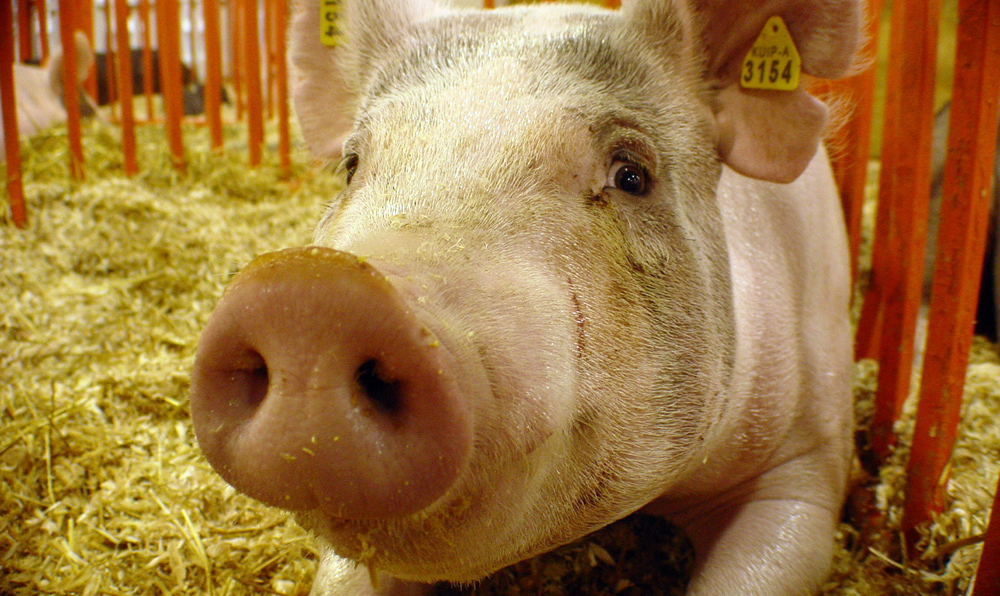
The Ministry of Food, Agriculture, and Fisheries has established a citizens’ panel consisting of 36 representatively selected Danes who will make recommendations on improving animal welfare for the country’s pigs as part of the “Together for the Animals” agreement. The citizen panel must adhere to the OECD’s deliberative principles for effective citizen engagement and will be administered by an independent third-party secretariat consisting of We Do Democracy and the Democracy x Foundation.
Denmark is the world’s largest producer of pork per capita, and pork production is a central pillar of the Danish food industry. Improved animal welfare in future pork production must be achieved by allowing representative citizens to strike a balance between rural and urban areas, between consumer expectations and producers’ conditions in a global market, and between economic sustainability and ethical responsibility.
New team collaboration to ensure an independent third-party secretariat
We Do Democracy and the Democracy x Foundation have joined forces to form a joint third-party secretariat to lead the new national deliberative citizens’ panel on animal welfare. The goal of these two leading Danish experts in deliberative democracy is to set high, shared standards for how the citizens’ panel can uphold the OECD’s principles in Denmark and to pool their collective experience to strengthen citizen participation in today’s difficult national policy decisions.
“Normally, we’re competitors, of course, but in this case it’s been important to stand together to ensure a high level of professionalism, demonstrate how the government can live up to the OECD’s principles, and avoid watering down the citizens’ assembly method in an immature market. With a small but highly deliberative citizen panel, we demonstrate how citizens can meaningfully engage with the difficult dilemmas facing society,” says Johan Galster of We Do Democracy.
Bjørn Bedsted of the Democracy x Foundation continues: “We have many years of experience in Denmark with citizen involvement in policy development, but we have yet to make it a standard practice and are being left behind by other countries, many of which are further along in their democratic development than Denmark. We hope that with this citizen panel, we can help accelerate this development here at home as well, so that various methods of citizen engagement become a standard part of the political toolkit.”
A citizens' panel is the "little sister" of a citizens' assembly
A deliberative citizens’ panel draws on the same methods and principles as a citizens’ assembly. A citizens’ panel differs in that it has fewer members, a shorter timeframe for completing the task, and a focus on producing recommendations for a specific challenge. The process begins with a focused core question, which is determined in collaboration with the client.
The process is also based on the same principles as a citizens’ assembly in accordance with international practice, with a focus on maintaining an arm’s-length relationship with the commissioning entity and compliance with the OECD’s principles regarding, among other things, the mandate, transparency, the use of independent experts, the protection of citizens, facilitation by an independent third-party secretariat, and a clear commitment by the commissioning authority to respond to and act on the panel’s recommendations.
Facts:
- Statistics Denmark is responsible for recruiting the 36 members from across the country so that the panel reflects the Danish demographic makeup
- The Citizens' Panel will be launched on January 15, 2026, when the 36 members will meet for two weekend sessions and three online sessions.
- The final recommendations to the minister and the Folketing committee are expected to be submitted in June 2026
- A third-party agreement has been entered into to ensure the citizens’ panel’s independence and to establish a mandate that requires the ministry to respond to the citizens’ panel’s recommendations within 6 months and again 24 months after the panel’s conclusion
Read more here:
https://foedevarestyrelsen.dk/om-os/nationalt-og-internationalt-samarbejde/nationale-samarbejder/borgerpanel-om-dyrevelfaerd